
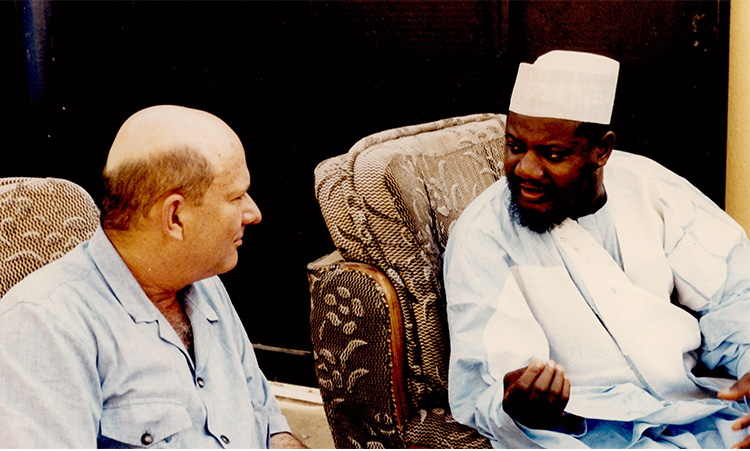
During his 20 years with the International Fund for Agricultural Development (IFAD), UNE alumnus Périn Saint Ange oversaw programs in 100 of the most disadvantaged countries in the world. Programs that financed smallholder agriculture, rural development and natural resource management that profoundly changed lives.
“People openly rejoiced during my regular field visits, acknowledging that they were now able to access agricultural support services and rural markets more easily,” said the former IFAD Associate Vice President and Programme Management Department head. “The financial support for communities – such as providing irrigation, rural infrastructure like all-weather roads, storage and electricity for crop processing or basic household needs – improved livelihoods and resilience. It recognised disadvantaged rural people as valuable members of their local community and their country.”
Loans and grants provided by Rome-based IFAD averaged US$1 billion annually, all with one goal: to improve the wellbeing of the rural poor. Globally, Périn and his senior international team became strategic partners and collaborators to member states, research institutions and farmer organisations, with a particular focus on technological advancement while addressing gender, nutrition and climate change. He had earlier been responsible for some of IFAD’s largest portfolios, in Ghana and Nigeria, partnering with the likes of the World Bank, regional development banks and United Nations agencies.
“Over the years I worked with four IFAD Presidents as we implemented projects to address food insecurity and poverty,” said Périn, who retired in 2018. “I was truly fortunate to work in some of the most fascinating places and meet amazing peoples.”
Back in the late 1980s Périn was an animal husbandry officer helping to boost local food production in his homeland of the Seychelles when he earned a scholarship to study for his Master of Economics at UNE. He and his wife Babette, who pursued a Bachelor of Financial Administration degree, moved with their young daughter to Armidale for three years.
“It was a perfect opportunity for continued professional advancement, and we benefitted from living in the peaceful regional city of Armidale, with its welcoming students and academic staff,” Périn said. “The local community and rural lifestyle were an important part of our stay.
“Academically, the dedication to the advancement of lifelong learning and the sharing of knowledge was remarkable. It prepared me to practice, research and develop realistic solutions to the many challenges countries were facing around the world, so while I left Armidale at the end of 1987, I felt that UNE never left me.”
As the Director General and Principal Secretary of the Ministry of Agriculture Seychelles, Périn took on the task of boosting food self-sufficiency. Efforts to use land more effectively and efficiently, improve access to technology, finance and markets would prove useful later in his career when he sought to fast-track agricultural investment and sustainable rural transformation on a much larger scale – first with the Food and Agriculture Organisation (FAO) of the United Nations and later IFAD.
“I worked with the FAO World Bank Cooperative Program to design and appraise investment projects across East Africa, the Near East and Central Europe. Food security was a huge concern and food deficits were increasingly common due to climatic changes that led to desertification, droughts and floods. Persistent regional and national conflicts and limited investment in the agricultural sector made matters worse. It was a great opportunity to gain valuable experience in the requirements for investments that benefit and empower entire rural communities.”
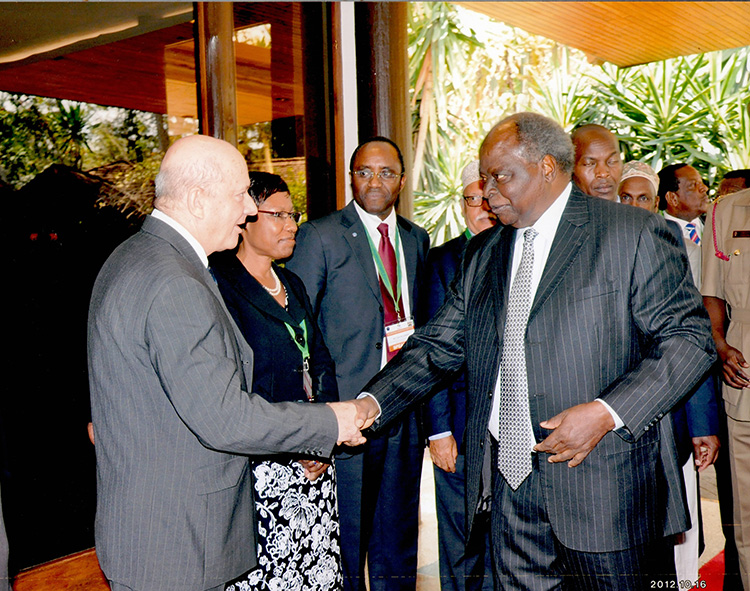
Image: Périn Saint Ange with President Kibaki of Kenya
Later, as an Assistant Secretary General of the United Nations Common System, Périn contributed to mobilising additional support from international organisations, bilateral government agencies and national stakeholders to expedite and scale investments. This was invaluable for delivering sustainable results and impact.
“Most significantly, the local institutions and rural communities developed a greater organisational capacity to take on the challenges they faced. IFAD investments leveraged the contributions and resourcefulness of rural communities and the local private sector – creating jobs and improving adaptation to climate risks – and this benefitted entire economic, social and environmental landscapes. Our work was doing a lot of good for needy and deserving communities.”
Many questioned Périn’s decision to leave his beautiful homeland and move his family across the globe to take up the challenges of international development. “My response has always been the same: the need to do more, to continue to grow, to develop, to experience new challenges and successes, to contribute to development with an impact on the most disadvantaged communities living in rural areas,” he said.
In the 1990s, Périn and his family were granted Australian citizenship, and they spend a few months each year here visiting family. He says he has “always been proud” to have been closely associated with Australian institutions whose agricultural knowledge and technology has been applied internationally. “I am grateful to Australia for my scholarship and the opportunity to learn from the best at UNE.”
Périn and Babette now live on the Seychelles island of his birth. On the idyllic shores of La Digue he is often reminded of his father’s wise words: “Doing good is good for you and makes you happier and thankful, even for the most basic and simple of things”.
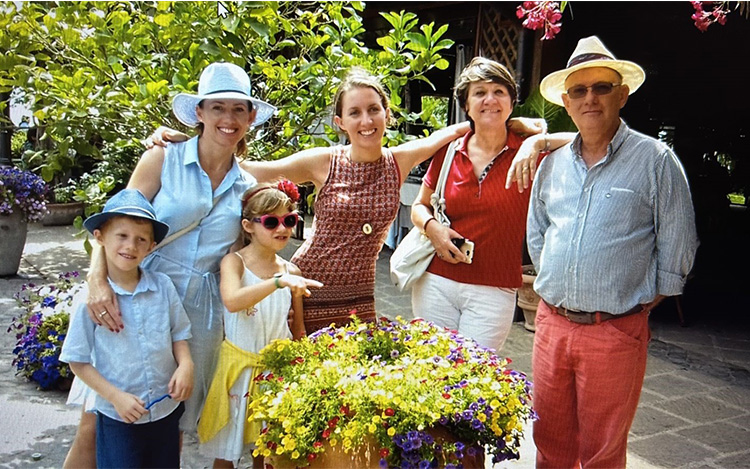
Image: Périn with his wife, daughters and grandchildren


