

UNE’s research excellence has been featured on the world stage, with six papers involving our researchers published in the prestigious Nature portfolio in the past six months alone.
Nature is widely considered the gold standard in scientific publishing, selecting only the most significant and rigorously peer-reviewed research for its portfolio of journals.
Associate Dean of Research at the Faculty of Science, Agriculture, Business and Law, Professor Amir Karton, says the achievement highlights UNE’s global research impact across a range of disciplines, including zoology, agriculture, palaeoanthropology, and ecology.
“It is one of the highest honours to be published by Nature, and to have six UNE research papers selected across its portfolio in just six months is an exceptional achievement,” he says. “It reflects the world-class quality research being conducted here at UNE.”
Professor Karl Vernes, Head of the School of Environmental and Rural Science, says having UNE research published in journals like Nature is an opportunity to push regional issues to the forefront.
“Here in ERS, our people are solving the big global challenges directly impacting rural and regional Australia, whether it’s through their passion for the natural world, their drive to be at the cutting edge of agriculture or the want to tackle the critical issue of sustaining our planet for future generations.”
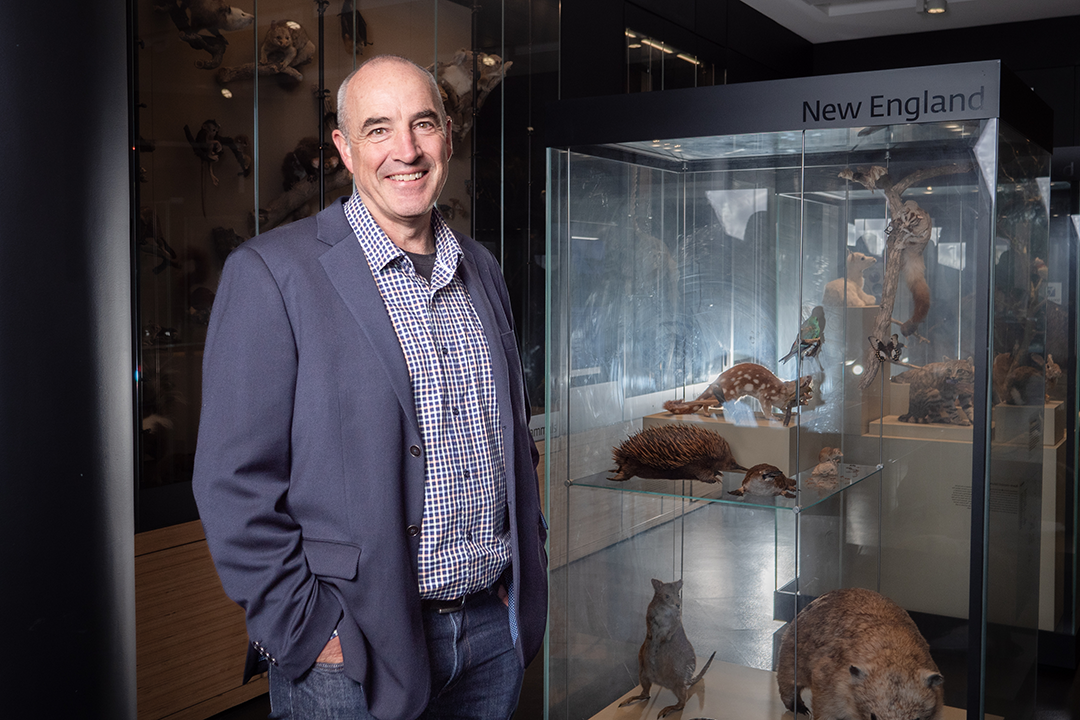
Image: Professor Karl Vernes, Head of the School of Environmental and Rural Science
Read an overview of the six published articles below:
Human contributions to global soundscapes are less predictable than the acoustic rhythms of wildlife - Professor Paul McDonald and Professor Karl Vernes (ERS)
(Published in Nature Ecology & Evolution)
This global study explored how human, biological, and geophysical sounds shape our world's soundscapes, comparing urban green spaces with pristine areas. They discovered that natural sounds follow highly predictable rhythms based on factors like latitude and time, while human-made sounds are much less predictable and often dominate urban environments. The research highlights that animals in urban areas are facing an increasingly noisy background, making communication a real challenge amidst a predictable natural symphony.
Scientific literature on carbon dioxide removal revealed as much larger through AI-enhanced systematic mapping – Adjunct Professor Annette Cowie (ERS)
(Published in Nature Communications)
This study used AI to provide a comprehensive systematic map of carbon dioxide research, revealing there to be three to four times the amount of studies than previously suggested.
Hominins on Sulawesi during the Early Pleistocene – Professor Mark Moore (HASS)
(Published in Nature)
UNE Professor of Archaeology and Palaeoanthropology, Mark Moore, is part of an international team that investigated seven stone tool flakes found on the Indonesian island of Sulawesi. The flakes indicate that hominins lived on Sulawesi at least 1.04 million years ago (mya), and possibly 1.48 mya, pre-dating the earliest evidence of modern human occupation on the island by nearly a million years.
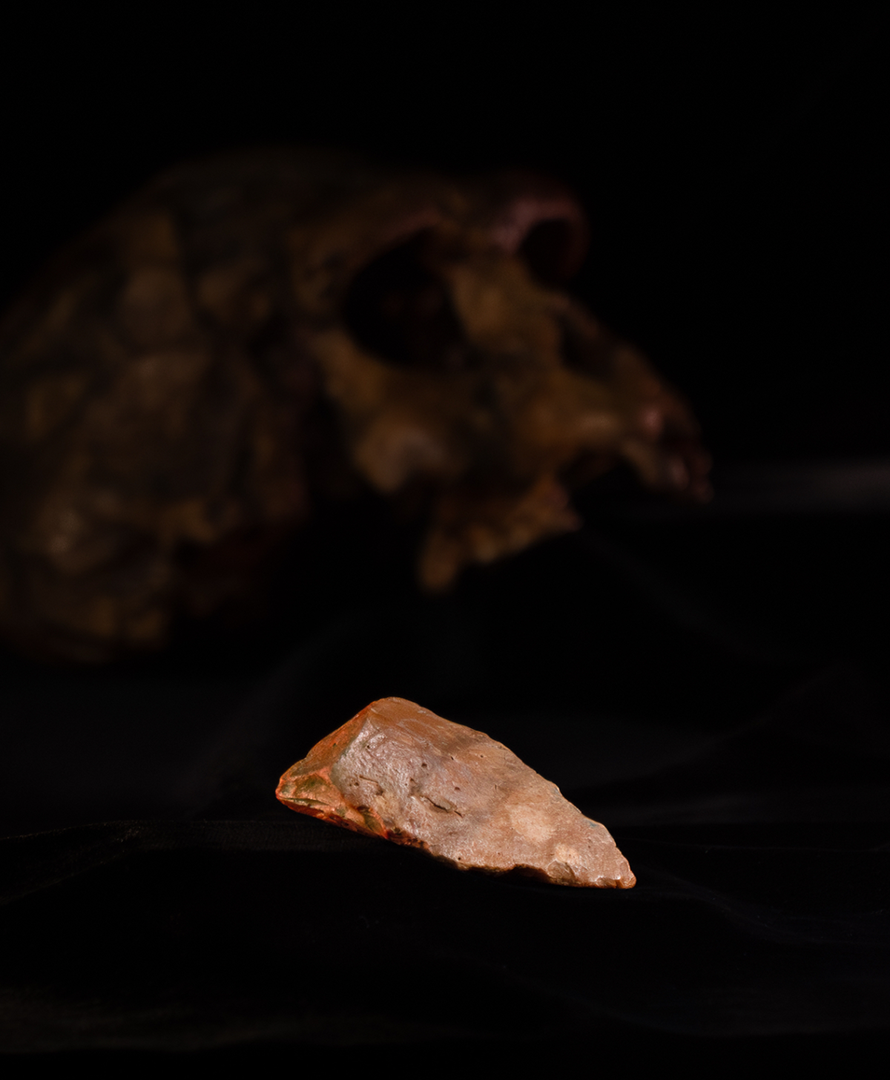
Image: One of the stone tools found at the Calio site in Sulawesi that have expanded understanding of hominin dispersal off the Asian mainland.
Global terrestrial nitrogen fixation and its modification by agriculture – Professor David Herridge (ERS)
(Published in Nature)
This study shows that biological nitrogen fixation may impose stronger constraints on the carbon sink in natural land biomes and represent a larger source of agricultural nitrogen than what is considered in existing analyses. This has implications for proposed safe operating limits for nitrogen use.
Canopy functional trait variation across Earth’s tropical forests – Dr Sabine Both (ERS)
(Published in Nature)
By combining field data from more than 1800 vegetation plots and tree traits with satellite remote-sensing, terrain, climate and soil data, this study mapped the functional diversity of forests. It revealed that tropical American forests are predicted to have 40% greater functional richness than tropical African and Asian forests.
Global impoverishment of natural vegetation revealed by dark diversity– Associate Professor John Hunter (ERS)
(Published in Nature)
This study explored how the more human influence there is in a region, the fewer suitable plant species there are, highlighting a hidden threat to biodiversity that "dark diversity" can help us address through better conservation strategies.

