
“You can’t have sustainable peace without addressing issues of justice,” says Marty Branagan, long-time activist and Associate Professor in Peace Studies at UNE. “At the same time, societies that aspire to be just, egalitarian and democratic require a commitment to peace, non-violence and the dismantling of militarism.”
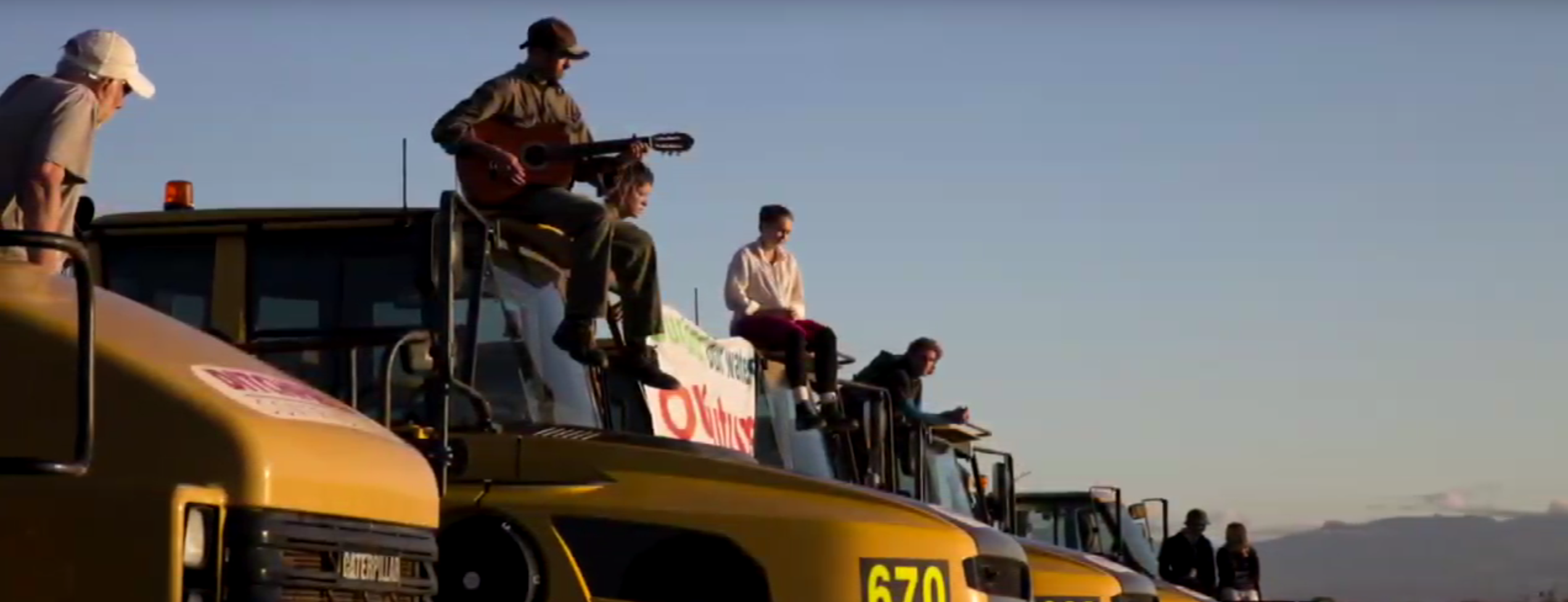
Such a commitment has shaped Marty’s life and work. Flowing first through Franklin River, Jabiluka and forest logging protests; eddying around his art, teaching and fiction writing; then spilling into busy Newcastle Harbour and the Pacific as part of the Rising Tide climate action movement.
“Peace begins in the hearts and minds of individuals and then radiates outwards and upwards,” he says. “There’s no point having great peace infrastructure and laws, international or national, if the people supposed to enforce them are not peaceful. I remain optimistic for the future because there’s always a current of positive actions that strive to counter the negative current and may one day bring more widespread peace.”
Especially today, that can be a challenge.
In his 2024 book The Cultural Dimensions of Peacebuilding – described as holding “profound political importance in today’s polarized world” – Marty explored how deeply entrenched militarism and violence are, influencing our media, language, entertainment, education, finance, relationships and even parenting.
The violence of Israel’s war in Gaza and the West Bank, and Hamas resistance, for instance, is only part of the conflict. “The second battle, as peace scholar Kevin P Clements observes, is for control of the narrative,” Marty says. Mouthpieces of “corporate-controlled mainstream media” help to shore up the “big business” of militarism and war, and the flood of spending and profits accompanying it.
Yet, motivated by contemporary and historical examples of peacebuilding – like the moving ‘Christmas Truce’ between allied and German troops during World War I, and the resolution of conflict in Northern Ireland – Marty stays the course.
“Non-violent resistance is particularly important right now, with the terrible violence occurring in Palestine, Israel, Russia, Ukraine, Myanmar and Sudan,” Marty says. “We must keep challenging the belief that a country needs to be defended through violence … that it’s a useful way to resist aggression or injustice. As we are seeing, it only results in the indiscriminate loss of human life, many of them children.”
When the undertow threatens, Marty draws inspiration from the Nordic region, Australia’s First Nations peoples and tribal societies in Latin America and elsewhere, who demonstrate that peaceful societies can exist. International peace agreements like the successful campaign for a Treaty on the Prohibition of Nuclear Weapons and the establishment of “peace parks” and museums (such as the Hiroshima Peace Museum) serve as other touchstones.
And, closer to home, there is always Dumaresq Creek, where Marty has been supporting clean-up and revegetation efforts, weeding both the creekbanks and his mind of negative thoughts and finding common ground.
“I find peace in caring for the creek, where you can see the results of your work,” he says. “Peace begins at home – for me through developing a relationship with the land I live on, as well as doing art, yoga and meditation, practising permaculture, and spending time with family and friends. And being involved with groups like Rising Tide, which are well organised and show that a community can begin to defend itself against fossil fuel projects without violence.”
As Peace Studies at UNE celebrates its forty-third year, Marty also takes pride in the contributions of alumni, who are active internationally, nationally and at the grassroots level.
“Some of our students come from places of turmoil, including some of the poorest communities on Earth, and many return home to assist with peacebuilding,” he says. “One of my former students is now working in Sudan with Nonviolent Peaceforce, trying to broker peace with armed groups, and I have had several students from the military over the years, who have seen violence up close and are seeking alternatives. Others counsel the victims of domestic violence or are peace educators themselves.
“The challenges of building a peaceful world are always formidable, but UNE’s program promotes the idea that peace is possible; it gets people thinking critically. We don’t have to rely entirely on the United Nations or governments to bring about peace. Every person and every student can be empowered to act, because while they may only contribute one small droplet, when you add together all those droplets around the world you see the tide rise.”
Late last year Marty returned to the Franklin River and rafted its length with his two children, guided by a former student. “It was an extraordinary adventure that I’d wanted to do ever since the blockade in 1982-3,” he says. “We watched that river grow from a small watercourse at its headwaters into something mighty and serene, surrounded by old-growth forest that had not been drowned by a dam; ancient forests that are still there because of people power.”

