You are here: UNE Home / Staff / Karl Vernes

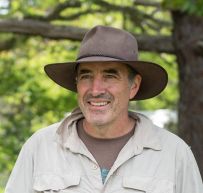
Karl Vernes

Snr.Lecturer, Faculty of Arts and Sciences, School of Environmental and Rural Sciences

Contact

Email: kvernes@une.edu.au
Room: W55 216
Phone: 02 6773 3255 (or +61 2 6773 3255 overseas)
Fax: 02 6773 2769

After finishing my undergraduate degree in Zoology and Marine Biology at James Cook University, I pursued an M.Sc. in Zoology from James Cook University, completing it in 1994. In 1995 I worked as a consultant biologist for the Kinhill Group in Brisbane before returning to James Cook University to undertake a Ph.D. in Zoology and Tropical Ecology. I spent 1997 in Canada writing my Ph.D. at The University of British Columbia, returning to Australia in 1998 to work for the Rainforest CRC on feral pig management in lowland swamp forests. In 1999 I began a 3.5 year tenure as the McCain Postdoctoral Fellow in the Biology Department at Mount Allison University, New Brunswick, Canada. At Mount Allison I also taught courses in Mammalogy and Conservation Biology and supervised undergraduate research students. In the latter half of 2002 I returned again to Australia to lecture in the School of Tropical Ecology at James Cook University (Cairns). In January of 2003 I joined the Discipline of Ecosystem Management at UNE as Lecturer in Vertebrate Ecology.

Areas of Teaching

First Semester

RSNR 110 Agriculture, Natural Resources and the Environment
Four introductory lectures on the biogeography, ecology and management of Australian terrestrial vertebrates.

ECOL210 Principles of Ecology
Eight lectures plus practical material and field trips dealing with community and population ecology.

EM331 Resource Survey and Habitat Evaluation
One lecture on methods used to survey and sample Australian terrestrial vertebrates.

Second Semester

EM251/561 Australian Wildlife: Evolution, Ecology and Land-Use Impacts
26 Lectures and 11 practicals/field trips based around the origins, adaptations and current status of the Australian vertebrate biota. Identification and quantitative techniques for surveying this biota are also key elements of the unit. This unit is compulsory for the B. Nat. Res. degree.

EM423 Wildlife Management
Offered in even-numbered years (scheduled to be taught next in 2004). This unit is undergoing a revision and more details will be available soon.

RSNR 120 Sustainable Resource Use and Environmental Management
Three introductory lectures on the sustainable management of Australian terrestrial vertebrates and their habitats.

Block Taught (Intensive) Units

EM453/553 Biological Conservation
Block unit (co-taught with Dr Caroline Gross)in odd-numbered years (next offerred in 2005). Conservation and management of Australian biological resources, drawing together elements of traditional ecology, landscape ecology, population genetics, behavioural ecology, policy and environmental economics to provide the student with a framework for practicing the essential elements of conservation management.

Qualifications

  • B.Sc. in Zoology and Marine Biology (James Cook University, 1989)
  • M.Sc. in Zoology (James Cook University, 1995)
  • Ph.D. in Zoology and Tropical Ecology (James Cook University, 2000)

Publications

Submitted Manuscripts

Pope, L.C., Vernes, K., Goldizen, A.W., Johnson, C. N. Gene flow is limited through both mating system and dispersal in a restricted small mammal, Bettongia tropica. [Submitted].

Steeves, B.J., Vernes, K. and Stewart, J.M. Increase in relative mass of salivary glands of northern short-tailed shrews (Blarina brevicauda) during approach to winter. [Submitted].

Publications

21. Johnson, C.N. Vernes, K. and Payne, A. (2005). Demography in relation to population density in two herbivorous marsupials: testing for source-sink dynamics versus independent regulation of population size. Oecologia, 142, in press. Published online (Dec 4th, 2004)

20. Vernes, K., Pope, L.C., Hill, C.J. and F. Baerlocher. (2005). Seasonality, dung specificity and competition in an assemblage of dung beetles in the Australian Wet Tropics, northeastern Australia. Journal of Tropical Ecology, 21(1), in press

19. Vernes, K., Johnson, C.N. and Castellano, M.A. (2004). Fire-related changes in hypogeous sporocarp biomass at foraging points used by a tropical mycophagous marsupial, the northern bettong (Bettongia tropica). Mycological Research, 108: 1438-1446.

18. Vernes, K. (2004). Breeding Biology and Seasonal Capture Success of Northern Flying Squirrels (Glaucomys sabrinus) and Red Squirrels (Tamiasciurus hudsonicus) in Southern New Brunswick. Northeastern Naturalist, 11: 123-137.

17. Vernes, K., Blois, S, and Baerlocher, F. (2004). Seasonal consumption of hypogeous fungi by northern flying squirrels (Glaucomys sabrinus) and red squirrels (Tamiasciurus hudsonicus) in old-growth forest, New Brunswick. Canadian Journal of Zoology, 82: 110-117.

16. Vernes, K. (2003). Fine-scale habitat preferences and habitat partitioning by three mycophagous mammals in tropical wet sclerophyll forest, northeastern Australia. Austral Ecology 28, 471-479.

15. Vernes, K. and Pope, LC. (2002). Fecundity, pouch young survivorship and breeding season of the northern bettong (Bettongia tropica) in the wild. Australian Mammalogy 23: 95-100.

14. Vernes, K. and Haydon, D.T. (2001). Effects of fire on northern bettong (Bettongia tropica) foraging behaviour. Austral Ecology 26: 649-656.

13. Vernes, K. (2001). Gliding performance of the northern flying squirrel (Glaucomys sabrinus) in mature mixed forest, eastern Canada. Journal of Mammalogy 82: 1026-1033.

12. Vernes, K., Castellano, M. and Johnson, C.N. (2001). Effects of season and fire on the diversity of hypogeous fungi consumed by a tropical mycophagous marsupial. Journal of Animal Ecology 70: 945-954.

11. Vernes, K., Johnson, C.N. and Mitchell, J. (2001). The effectiveness of trapping in reducing pig abundance in the Wet Tropics of north Queensland. Pp 51-56 In: Johnson, C.N. (ed);Feral Pigs: Pest Status and Prospects for Control. Proceedings of a Feral Pig Workshop, James Cook University, Cairns, March 1999. Cooperative Research Centre for Tropical Rainforest Ecology and Management, Cairns.

10. Vernes, K., Winter, J. and Dennis, A. (2001). Mammalian diet and broad hunting strategy of the dingo (Canis familiaris dingo) in the wet tropical rain forests of northeastern Australia. Biotroica 33: 339-345.

9. Vernes, K. and Pope, L.C. (2001). Stability of nest range, home range and movement of the northern bettong (Bettongia tropica) following moderate-intensity fire in a tropical woodland, north-eastern Queensland. Wildlife Research 28: 141-150.

8. Vernes, K. (2000). Immediate effects of fire on the survivorship of an endangered marsupial: the northern bettong (Bettongia tropica). Biological Conservation 96: 305-309.

7. Vernes, K. (1999). Pellet counts to estimate density of a rainforest kangaroo. Wildlife Society Bulletin 27: 991-996.

6. Williams, S.E., Vernes, K. and Coughlan, J. (1999). The vertebrate fauna of Cannabullen Plateau: a mid-altitude rainforest in the Australian Wet Tropics. Memoirs of the Queensland Museum 43: 849-858.

5. Vernes, K. (1998). Observation of a long-range overland movement event by an adult common water rat, Hydromys chrysogaster. Australian Mammalogy 20 (3): 409-410.

4. Vernes, K., Marsh, H. and Winter, J. (1995). Home-range characteristics and movement patterns of the red-legged pademelon (Thylogale stigmatica) in a fragmented tropical rainforest. Wildlife Research 22: 699-708.

3. Vernes, K. (1995). The diet of the red-legged pademelon Thylogale stigmatica (Gould) (Marsupialia: Macropodidae) in fragmented tropical rainforest, north Queensland, Australia. Mammalia 59: 517-525.

Johnson, P.M. and Vernes, K. (1995). Red-legged Pademelon, Thylogale stigmatica pp. 397-399 In: Strahan (ed.);The Mammals of Australia'

, Reed Books, Sydney.

2. Johnson, P.M. and Vernes, K.A. (1994). Reproduction in the red-legged pademelon, Thylogale stigmatica Gould (Marsupialia: Macropodidae) and age estimation and development of pouch young. Wildlife Research 21: 553-558.

1. Vernes, K. (1993). A Drive Fence for Capturing Small Forest-dwelling Macropods. Wildlife Research 20: 189-91.